
Precision manufacturing depends on processes that can repeatedly produce accurate, high-quality components while maintaining efficiency, consistency, and cost control. While additive manufacturing technologies such as 3D printing have gained significant attention in recent years, subtractive manufacturing processes remain the backbone of modern industrial production. Now, one of the most widely used subtractive manufacturing methods is CNC turning. By removing material from a rotating workpiece, CNC turning produces highly accurate cylindrical components used throughout aerospace, medical, automotive, energy, and industrial equipment applications.
Although additive manufacturing has expanded design possibilities for prototypes and highly intricate structures, CNC turning continues to offer distinct advantages when strength, material selection, dimensional accuracy, surface finish, and production repeatability are required. While Additive has grown, the most prevalent type of Sub tractive manufacturing, CNC machining, has continued to expand. Understanding how CNC turning works helps engineers and buyers determine when it is the most effective manufacturing solution.
Key Takeaways: What Is CNC Turning and How Does It Work?
- CNC turning is a machining process that removes material from a rotating workpiece to create precise cylindrical components.
- The process provides excellent accuracy, repeatability, and efficiency for both prototype and production manufacturing.
- CNC turning is commonly used to produce shafts, bushings, fittings, pins, fasteners, housings, and other rotational parts.
- Modern CNC turning often works alongside milling, finishing, inspection, and assembly operations to create fully completed components.
What is the trend of worldwide sales for CNC machine tools in the last three years?
The ability of CNC Machines to make precise, complex parts in one operation is a key driver of innovation. CNC machining is also indispensable in supporting new markets not only in design validation, but in quickly moving from prototype to 24 per day, full-scale production. A good example of this at Thuro has been our support of design, validation, and production of key CNC machined components for UAV (Unmanned Aerial Vehicles). In a recent example, an Aerospace Customer partnered with us to validate a design, make an initial sample, and be in production within 20 working days.
What Is CNC Turning?
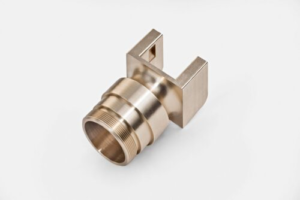
CNC turning is a subtractive manufacturing process that uses computer-controlled lathes to remove material from a rotating workpiece. During the process, cutting tools are precisely guided against the spinning material to create the desired shape and dimensions.
The term CNC stands for Computer Numerical Control, meaning the machine follows programmed instructions that dictate cutting paths, speeds, feeds, and tooling movements.
Unlike manual turning operations, CNC turning allows manufacturers to produce highly accurate and repeatable parts with minimal operator intervention.
Evolution of CNC Machining
CNC machining traces its roots to cam-driven lathes. The introduction of single- and multi-spindle cam-driven lathes helped enable mass automobile production. In these machines, rises and dwells in cams which were mounted on camshafts, control the movement of slides and turrets toward and away from the workpiece. Each part must be completed within one camshaft revolution, limiting part complexity. Process improvements are also slow because changing the machining sequence requires cutting a new set of cams.
For higher production larger parts, the multi-Spindle Lathe is still the most productive production lathe that exists. However, in the 1990’s, with the exponential increase in computing power and reduction in computing cost, the ability to use CNC controls coupled with servo motors to precisely position off the shelf tools, to generate shapes, grooves and threads through contour turning, was monumental. Specifically, in increasing one’s ability to make complex parts in one process.
At Thuro, we still utilize Mult-Spindle Screw Machines. At Thuro, when considering the right machine technology to support our customers’ requirements, first and foremost, our Engineers consider which process permits us to be “done in one.” Specifically, done in one machine operation which means raw material which in lathe machining would be a bar, enters the machine on one end, and a finished part emerges from the machine on the other end. A multi-Spindle lathe can have up to 14 independent stations working simultaneously to complete the part in a highly efficient way. However, if 15 stations are needed, a secondary operation “off machine” would be required. This requires refixturing a part.
Our most capable CNC Turret lathes, which have three turrets, have up to 36 tools. Not only can we do a variety of turning operations on our Triple Turret lathes, but we can also perform a variety of milling operations on all part surfaces. This includes not only milling but drilling, tapping and slotting operations. The most productive lathes with milling capability are called Turn/Mills.
Why Subtractive Manufacturing Still Matters
CNC turning belongs to a category known as subtractive manufacturing, where material is removed from a solid workpiece to create the desired component.
In recent years, additive manufacturing technologies have received considerable attention because they build parts layer by layer using materials such as plastics, resins, or metal powders. While those technologies have opened new opportunities for prototyping and certain production applications, subtractive manufacturing remains the preferred choice for many precision components.
Manufacturers continue to rely on CNC turning because it offers several advantages:
- Tight dimensional tolerances
- Consistent repeatability
- Excellent surface finishes
- Broad material compatibility
- Strong mechanical properties
- Efficient production for both prototypes and larger production runs
Because CNC turning begins with solid material stock, finished components often maintain the full material properties required for demanding applications. This makes the process particularly valuable for components used in aerospace systems, medical devices, industrial equipment, hydraulic systems, and other performance-driven applications.
How Does CNC Turning Work?
The CNC turning process follows several key steps.
1. Part Design
The process begins with a CAD (Computer-Aided Design) model that defines the part’s dimensions, features, and tolerances.
2. Programming
The CAD model is converted into machine instructions using CAM (Computer-Aided Manufacturing) software. These instructions determine how the CNC lathe will machine the part.
3. Material Loading
Raw material, often referred to as bar stock or a workpiece, is loaded into the machine.
Common materials include:
- Aluminum
- Stainless steel
- Carbon steel
- Brass
- Copper
- Titanium
- Plastics
- Specialty alloys
4. Machining Operations
The CNC lathe rotates the material while cutting tools remove excess material.
Operations may include:
- Facing
- Turning
- Grooving
- Boring
- Drilling
- Threading
- Parting
5. Inspection
Once machining is complete, parts are inspected to verify they meet dimensional and quality requirements.
Common CNC Turning Operations
Modern CNC lathes can perform multiple machining operations within a single setup.
Straight Turning
Straight turning reduces the diameter of a workpiece along a specified length.
Facing
Facing creates a smooth flat surface at the end of the part.
Threading
Threading produces internal or external threads for fasteners, fittings, and connection points.
Drilling
Many CNC lathes can drill holes directly into the rotating workpiece.
Boring
Boring enlarges and refines existing holes to tight tolerances.
Grooving
Grooving creates channels, recesses, or relief features within the component.
Common Parts Produced Through CNC Turning
CNC turning is commonly used to manufacture:
- Shafts
- Bushings
- Sleeves
- Pins
- Spacers
- Couplings
- Fittings
- Fasteners
- Housings
- Connectors
- Valve components
- Hydraulic parts
The process is particularly effective for parts that feature round or cylindrical geometries.
Advantages of CNC Turning
Manufacturers rely on CNC turning for several reasons.
High Precision
Computer-controlled machining allows for tight dimensional tolerances and consistent part quality.
Repeatability
Once a program is verified, the same part can be produced repeatedly with minimal variation.
Production Efficiency
Automated equipment helps reduce setup time and improve throughput.
Material Versatility
CNC turning can process a wide range of metals and engineered plastics.
Cost-Effective Manufacturing
For many rotational parts, CNC turning provides an efficient manufacturing method that minimizes waste while maximizing productivity.
CNC Turning vs. Additive Manufacturing
As additive manufacturing technologies continue to evolve, many manufacturers ask whether CNC turning will eventually be replaced by 3D printing and other additive processes.
In reality, the two technologies often serve different purposes.
Additive manufacturing excels when producing highly intricate internal structures, rapid prototypes, or components with shapes that would be difficult to machine conventionally.
However, CNC turning remains the preferred solution for many production applications because it provides:
Greater Material Selection
CNC turning can machine a wide range of materials, including:
- Aluminum
- Stainless steel
- Carbon steel
- Brass
- Copper
- Titanium
- Engineering plastics
- Specialty alloys
This flexibility allows manufacturers to choose materials based on performance requirements rather than manufacturing limitations.
Superior Dimensional Accuracy
Many industries require components that must consistently meet tight tolerances. CNC turning provides excellent precision and repeatability across both low-volume and high-volume production runs.
Stronger Finished Components
Because CNC turning starts with solid material stock, finished parts retain the mechanical properties of the original material. This can be particularly important for components subjected to high loads, pressure, temperature variation, or continuous operation.
Better Production Efficiency
While additive manufacturing can be highly effective for prototypes and specialized applications, CNC turning often provides faster cycle times and lower costs for many production quantities, especially for rotational components.
CNC Turning vs. CNC Milling
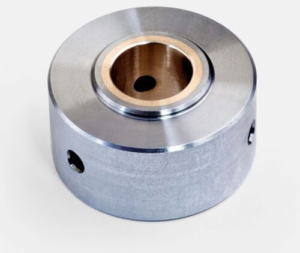
Although both processes remove material through machining, they operate differently.
CNC Turning
In CNC turning:
- The workpiece rotates
- The cutting tool remains relatively stationary
- Best suited for cylindrical parts
CNC Milling
In CNC milling:
- The cutting tool rotates
- The workpiece remains stationary
- Best suited for flat surfaces, pockets, and complex contours
Many manufacturers use both processes together to create finished components.
Industries That Use CNC Turning
CNC turning supports a wide range of industries.
Aerospace
Precision turned components are used in aircraft systems, engines, and structural assemblies.
Automotive
Manufacturers use CNC turning for shafts, fittings, fuel system components, and transmission parts.
Medical
Medical device manufacturers often require precision-machined components with strict tolerances.
Industrial Equipment
Pumps, valves, actuators, and automation equipment frequently utilize turned components.
Energy
Power generation and processing equipment rely on machined components capable of performing in demanding environments.
Material Considerations for CNC Turning
Material selection significantly influences machining performance.
Manufacturers typically evaluate:
- Strength requirements
- Corrosion resistance
- Temperature exposure
- Weight considerations
- Machinability
- Cost objectives
Choosing the right material helps balance performance requirements with manufacturing efficiency.
Why CNC Turning Remains a Core Manufacturing Process
Despite the rapid growth of additive manufacturing and other advanced production technologies, CNC turning continues to serve as one of the most trusted manufacturing methods in modern industry.
Its ability to produce precise, repeatable components from a broad range of materials makes it a practical solution for everything from prototype development to full-scale production. When manufacturers require tight tolerances, excellent surface finishes, reliable mechanical properties, and consistent quality, CNC turning remains one of the most dependable options available.
Rather than being replaced by newer technologies, CNC turning continues to evolve alongside them. As manufacturers evaluate the strengths of both additive and subtractive processes, CNC turning remains a foundational manufacturing technology that supports the production of high-performance components across virtually every major industry.
Partner With an Experienced CNC Turning Provider
Whether you need precision shafts, custom fittings, housings, pins, bushings, or other machined components, partnering with an experienced CNC turning provider can help ensure quality, efficiency, and reliable delivery. From prototype development to production manufacturing, our team can support your machining requirements with the expertise and capabilities needed to keep your project moving forward. Contact us today to discuss your CNC turning needs and request a quote.